

In today’s fast-paced logistics ecosystem, transportation companies face increasing pressure to deliver faster while reducing operational costs. Rising fuel prices, traffic congestion, inefficient routing, and last-mile delivery challenges make it difficult to maintain profitability. Traditional route planning methods are no longer sufficient.
This is where AI-powered route optimization is transforming the transportation industry. By leveraging machine learning, real-time data, and predictive analytics, AI systems can determine the most efficient routes, reduce fuel consumption, and ensure timely deliveries.
What Is AI Route Optimization?
AI route optimization uses advanced algorithms and machine learning models to calculate the most efficient delivery routes. Unlike static GPS systems, AI continuously adapts routes based on:
- Real-time traffic conditions
- Weather patterns
- Delivery priorities
- Fuel efficiency
- Vehicle capacity
- Road restrictions
The goal is simple: minimize distance, reduce fuel consumption, and maximize delivery efficiency.
Why Traditional Routing Falls Short
Manual or rule-based routing systems struggle with:
- Static route planning
- Lack of real-time data
- Inefficient last-mile delivery
- High fuel consumption
- Poor adaptability to disruptions
These inefficiencies lead to increased operational costs and delayed deliveries.
AI solves these problems by creating dynamic, intelligent routing systems.
How AI Route Optimization Works
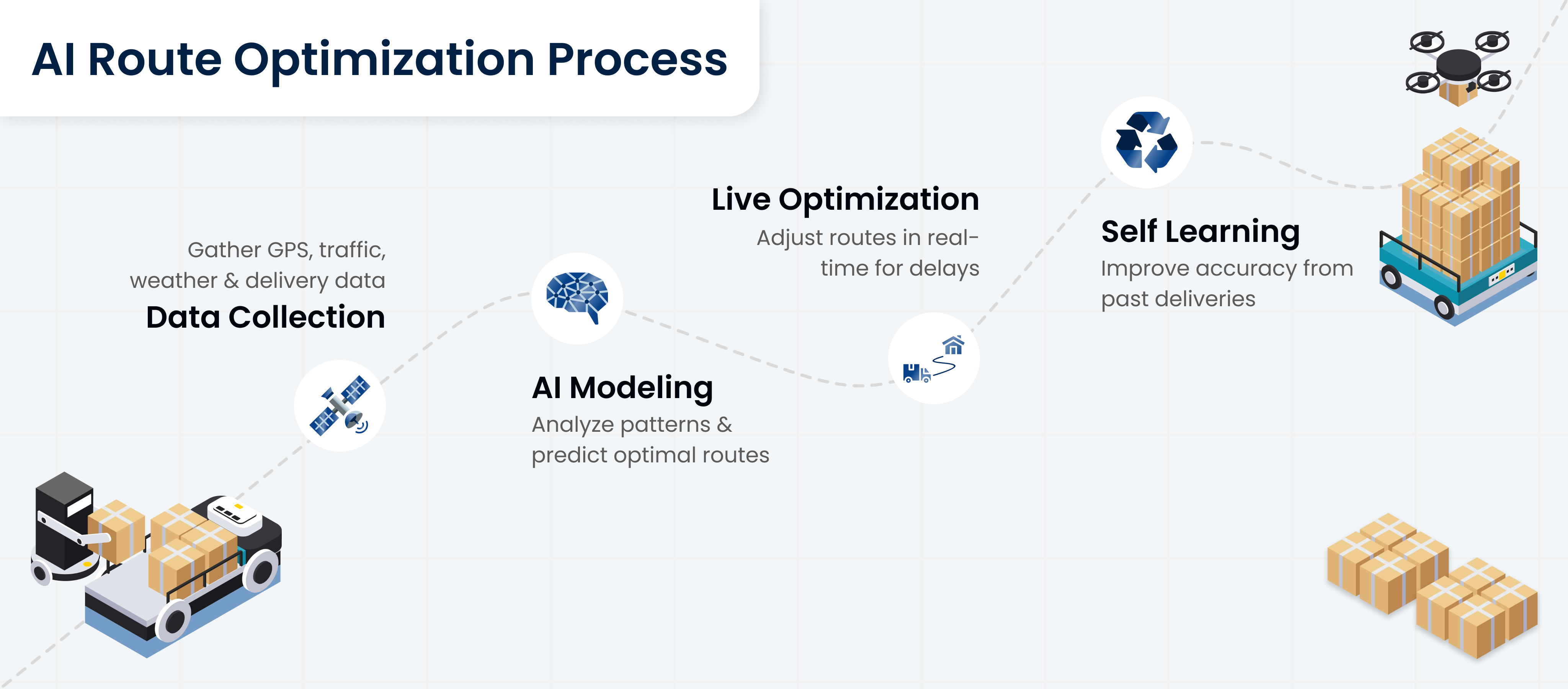
1. Data Collection & Integration
AI systems gather data from:
- GPS and telematics
- Traffic APIs
- Weather systems
- Delivery schedules
- Customer locations
2. Machine Learning Models
Algorithms analyze historical and real-time data to predict optimal routes and potential disruptions.
3. Dynamic Route Adjustment
Routes are updated in real time based on traffic congestion, accidents, or delays.
4. Continuous Learning
The system improves over time by learning from past delivery patterns and outcomes.
AI Route Optimization in Action: Real-World Use Cases
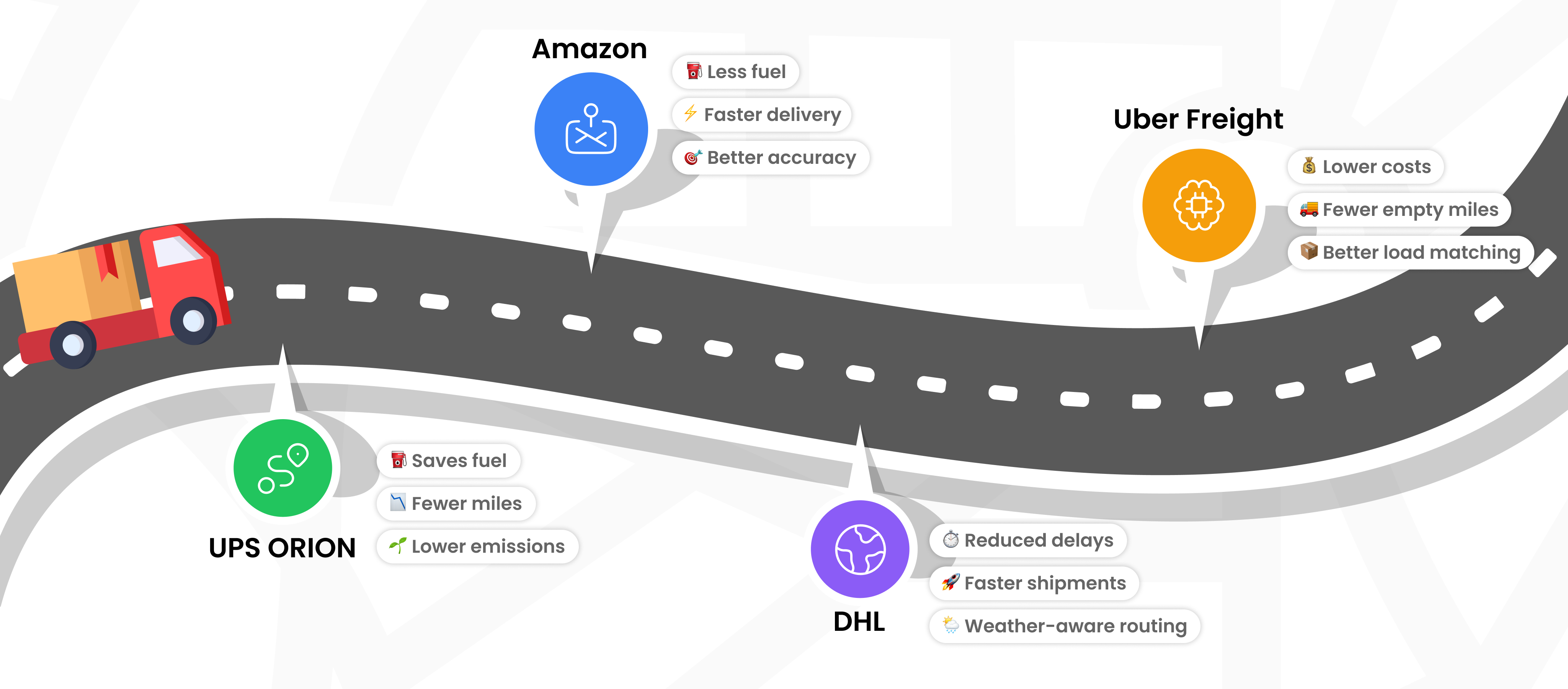
1. UPS ORION System
UPS uses its ORION (On-Road Integrated Optimization and Navigation) system powered by AI.
Impact:
- Saves 10 million gallons of fuel annually
- Reduces delivery miles by millions
- Cuts carbon emissions significantly
This system analyzes over 200 variables to determine the most efficient routes for drivers.
2. Amazon Logistics Network
Amazon uses AI-driven route optimization for last-mile delivery.
Impact:
- Faster delivery times (same-day and next-day delivery)
- Reduced fuel consumption
- Improved delivery accuracy
AI also clusters deliveries to minimize travel distance.
3. DHL Smart Logistics
DHL integrates AI with real-time traffic and weather data.
Impact:
- Faster international shipments
- Reduced delays due to disruptions
- Improved route efficiency across global logistics networks
4. Uber Freight
Uber Freight uses AI to optimize truck routing and load matching.
Impact:
- Reduced empty miles
- Increased driver utilization
- Lower transportation costs
Key Benefits of AI Route Optimization
Reduced Fuel Costs
AI minimizes unnecessary travel distance and idle time, significantly lowering fuel consumption.
Faster Deliveries
Optimized routes ensure quicker delivery times and improved customer satisfaction.
Improved Fleet Efficiency
Better route planning increases vehicle utilization and reduces downtime.
Real-Time Decision Making
AI adapts instantly to changing conditions like traffic or weather.
Lower Carbon Emissions
Reduced fuel usage contributes to sustainability goals.
AI in Last-Mile Delivery Optimization
Last-mile delivery is the most expensive part of logistics. AI plays a crucial role by:
- Clustering nearby deliveries
- Optimizing delivery sequences
- Reducing failed delivery attempts
- Predicting delivery windows
Companies using AI in last-mile delivery can reduce costs by up to 20–30%.
Technologies Behind AI Route Optimization
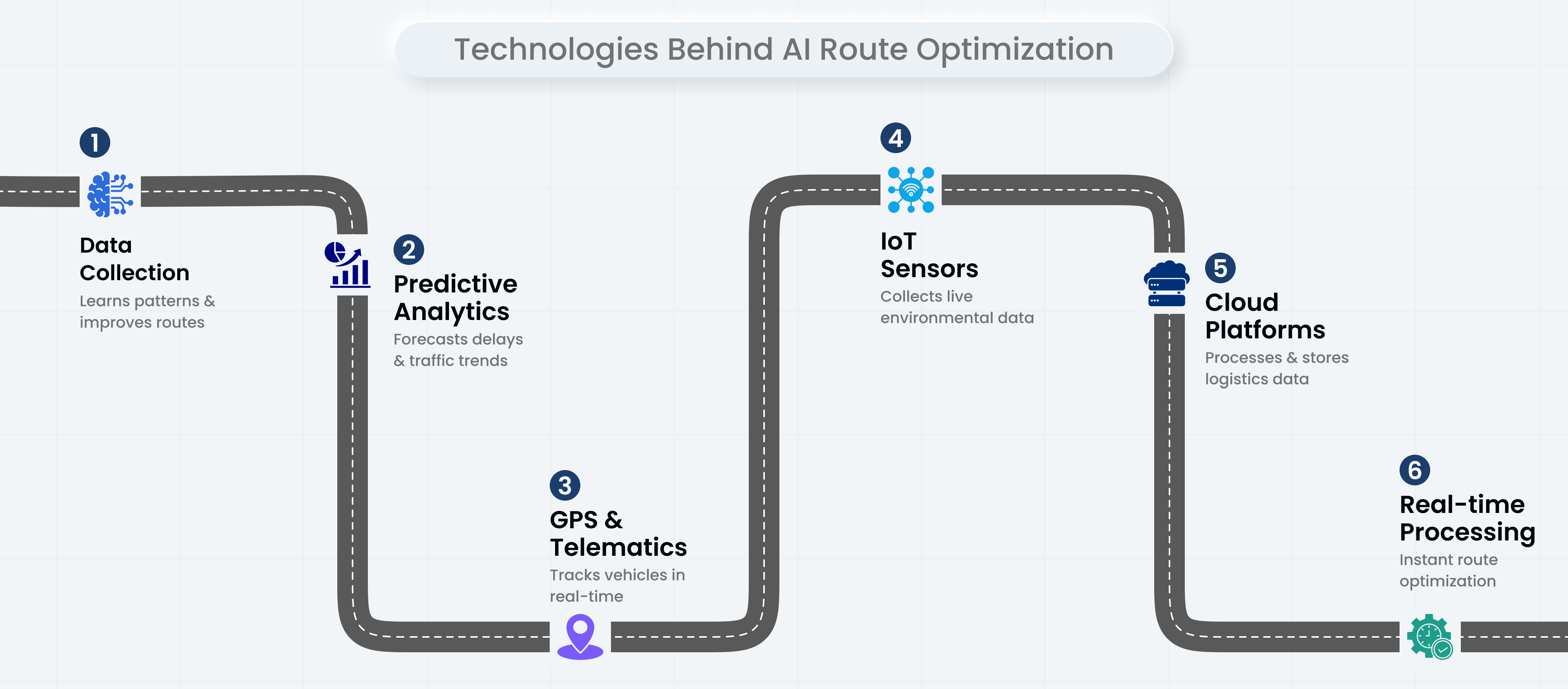
- Machine Learning algorithms
- Predictive analytics
- GPS and telematics
- IoT sensors
- Cloud-based logistics platforms
- Real-time data processing systems
These technologies work together to create intelligent transportation systems.
Challenges in Implementing AI Routing
Despite its benefits, companies may face:
- Integration with legacy systems
- Data quality issues
- High initial investment
- Need for skilled AI professionals
However, the long-term ROI outweighs these challenges.
Future of AI in Transportation
AI route optimization is evolving towards:
- Autonomous delivery vehicles
- Drone-based logistics
- Hyper-accurate delivery predictions
- Fully automated fleet management systems
The future of transportation will be driven by intelligent, self-optimizing systems.
Conclusion
AI route optimization is no longer optional—it is essential for modern transportation businesses. By reducing fuel costs, improving delivery speed, and enhancing operational efficiency, AI enables companies to stay competitive in an increasingly demanding logistics environment.
Organizations that adopt AI-driven route optimization today will lead the future of smart transportation.
FAQs
1. What is AI route optimization?
AI route optimization uses machine learning and real-time data to calculate efficient delivery routes, reducing travel time, fuel consumption, and operational costs.
2. How does AI reduce fuel costs in transportation?
AI identifies shortest routes, avoids traffic congestion, reduces idle time, and optimizes delivery sequences, resulting in lower fuel usage and transportation expenses.
3. Which industries benefit from AI route optimization?
Logistics, e-commerce, transportation, food delivery, retail, and courier services benefit from AI route optimization to improve efficiency and reduce operational costs.
4. Can AI improve last-mile delivery efficiency?
Yes, AI optimizes delivery routes, clusters orders, predicts delivery windows, reduces failed deliveries, and improves overall last-mile logistics performance.
5. What technologies power AI route optimization systems?
Machine learning, predictive analytics, IoT sensors, GPS tracking, cloud computing, and real-time data processing technologies power AI route optimization systems.


