

The modern supply chain is no longer just about transportation and warehousing. It is about intelligence, speed, resilience, and real-time decision-making. Global disruptions, fluctuating demand, and rising customer expectations have made traditional supply chain systems outdated.
To stay competitive in 2025 and beyond, businesses must build a modern AI-powered supply chain stack — a connected ecosystem that integrates data, automation, predictive intelligence, and workflow orchestration.
This blog explores how to build that stack and what technologies are essential for future-ready supply chains.
Why Traditional Supply Chains Are Failing
Legacy supply chains suffer from:
- Siloed data across departments
- Manual planning and forecasting
- Reactive decision-making
- Poor demand visibility
- Slow risk response
These inefficiencies lead to stockouts, overstocking, delayed deliveries, and margin loss.
AI changes this from reactive to predictive and autonomous.
The 7-Layer AI-Powered Supply Chain Stack
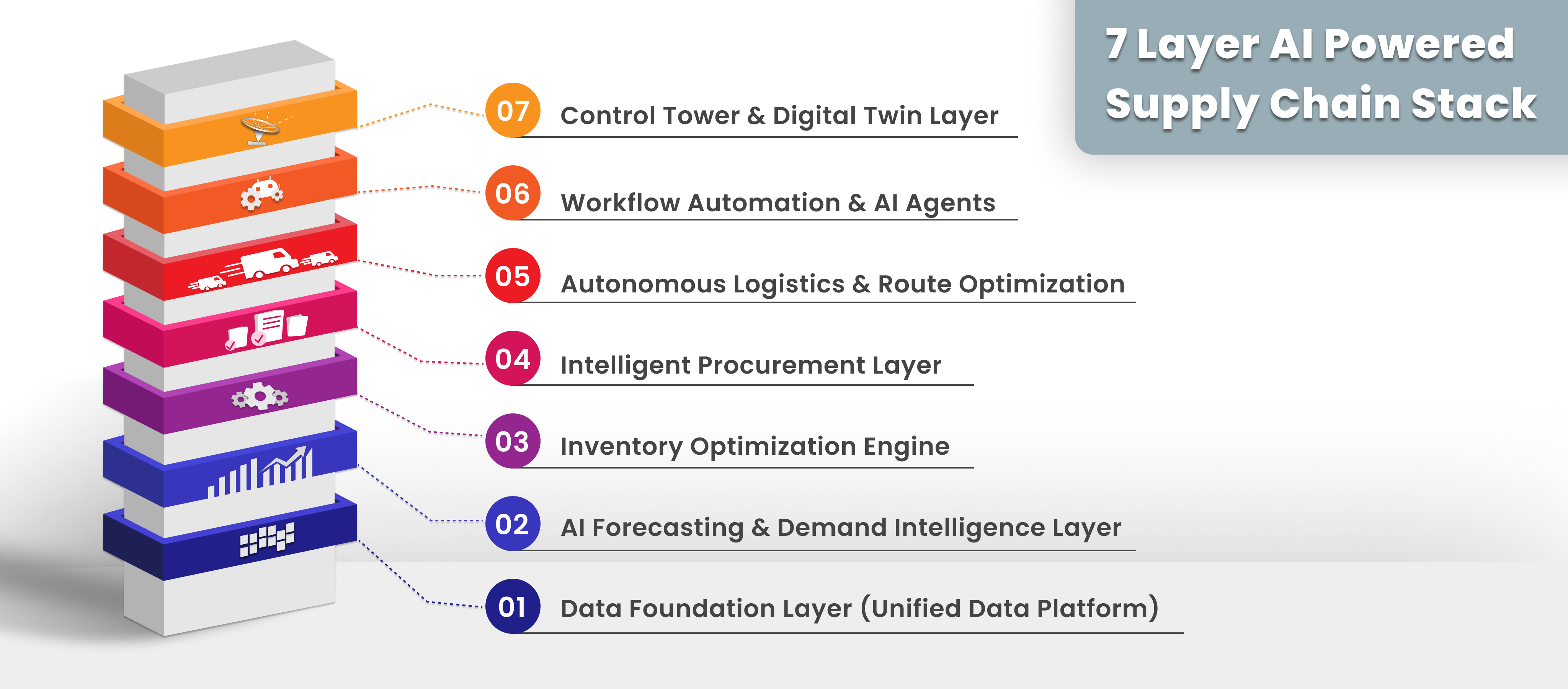
A modern stack is not a single tool. It is a layered ecosystem.
1. Data Foundation Layer (Unified Data Platform)
AI is only as powerful as the data it receives.
This layer integrates:
- ERP systems
- Warehouse Management Systems (WMS)
- Transportation Management Systems (TMS)
- IoT devices
- Supplier portals
- CRM and sales data
Technologies used:
- Cloud data lakes
- Real-time data pipelines
- API integrations
- IoT sensors
Goal: Create a single source of truth.
2. AI Forecasting & Demand Intelligence Layer
This is the brain of the stack.
AI models analyze:
- Historical sales data
- Seasonality
- Market trends
- Economic indicators
- Weather data
- Promotions
Result:
- Accurate demand forecasting
- Dynamic inventory optimization
- Reduced stockouts and excess inventory
Modern AI forecasting reduces forecast error by 20–50%.
3. Inventory Optimization Engine
AI continuously balances:
- Holding costs
- Lead times
- Service level agreements
- Supplier performance
Instead of static reorder points, AI adjusts safety stock dynamically.
Impact:
- Lower working capital
- Higher fulfillment rates
- Better cash flow
4. Intelligent Procurement Layer
AI enhances procurement through:
- Supplier risk scoring
- Automated RFQs
- Price prediction models
- Contract analytics
- Fraud detection
AI agents can even recommend alternate suppliers during disruptions.
This creates a resilient procurement ecosystem.
5. Autonomous Logistics & Route Optimization
Transportation is one of the largest cost centers.
AI-powered systems:
- Optimize routes in real time
- Predict delivery delays
- Reduce fuel consumption
- Monitor fleet health
- Improve last-mile efficiency
When integrated with IoT, logistics becomes predictive rather than reactive.
6. Workflow Automation & AI Agents
This is where transformation accelerates.
AI workflow agents can:
- Auto-approve low-risk purchase orders
- Send shipment alerts
- Trigger restocking
- Escalate supplier delays
- Generate daily performance reports
- Predict disruption risks
Instead of manual coordination across teams, AI agents orchestrate tasks across departments.
This eliminates operational bottlenecks.
7. Control Tower & Digital Twin Layer
The top layer provides visibility.
A Supply Chain Control Tower offers:
- Real-time dashboards
- Risk heatmaps
- KPI tracking
- Predictive alerts
- Scenario simulation
Digital twins simulate:
- What happens if a supplier fails?
- What if demand spikes 40%?
- What if a port closes?
Decision-makers can act before disruption occurs.
How AI Changes Supply Chain Economics
Traditional Model:
Manual planning → Delays → Firefighting → Higher costs
AI Model:
Predictive planning → Automated workflows → Real-time optimization → Lower costs & higher service levels
AI-driven supply chains typically achieve:
- 30% faster decision cycles
- 20–40% reduction in inventory costs
- 15–25% logistics cost savings
- Improved OTIF (On-Time-In-Full) performance
The Role of AI Agents in the Modern Stack
The biggest shift in 2025 is from dashboards to autonomous systems.
AI agents do not just analyze — they act.
Examples:
- If demand forecast changes → AI updates inventory → triggers procurement → informs logistics.
- If shipment delay detected → AI reroutes delivery → informs customer → adjusts warehouse plan.
This is end-to-end orchestration.
Human teams shift from coordination to strategy.
Key Technologies Powering the Stack
- Machine Learning
- Predictive Analytics
- Natural Language Processing
- Computer Vision
- IoT Sensors
- Cloud Computing
- API-first Architecture
- Robotic Process Automation (RPA)
- Generative AI for reporting
Integration is more important than individual tools.
Implementation Roadmap
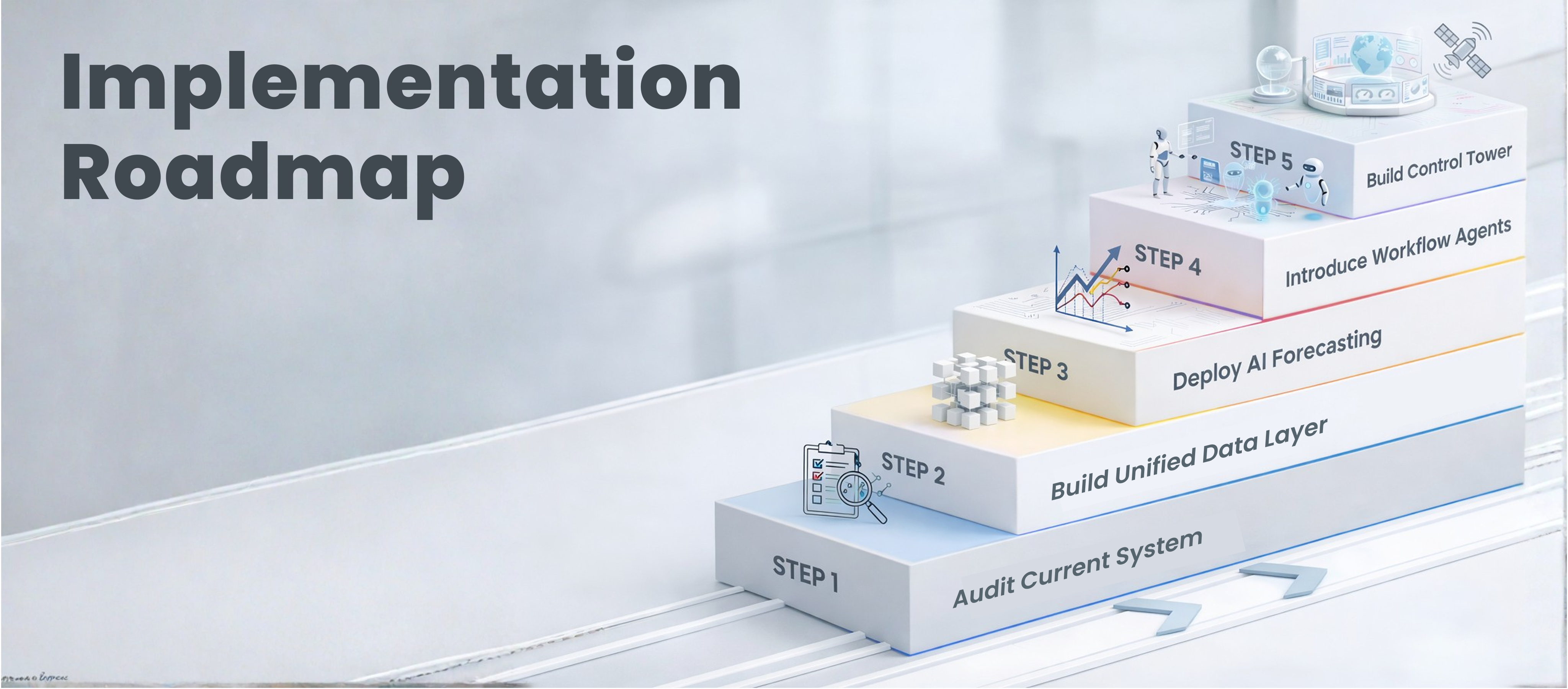
Step 1: Audit Current Systems
Identify gaps, silos, and manual dependencies.
Step 2: Build Unified Data Layer
Consolidate ERP, WMS, and TMS into one platform.
Step 3: Deploy AI Forecasting
Start with demand prediction and inventory optimization.
Step 4: Introduce Workflow Agents
Automate repetitive supply chain decisions.
Step 5: Build Control Tower
Enable real-time visibility and predictive alerts.
Start small. Scale fast.
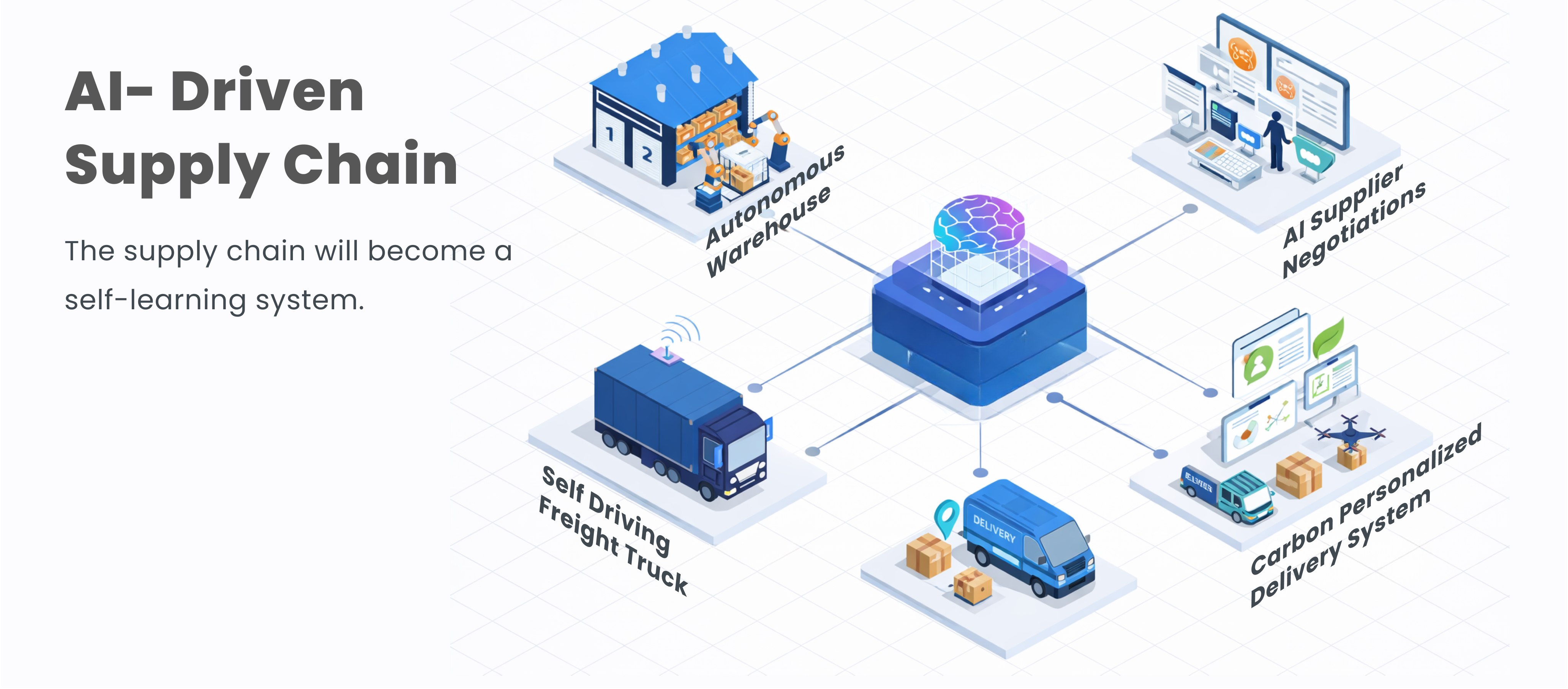
Future of AI-Driven Supply Chains
The next evolution includes:
- Fully autonomous warehouses
- Self-driving freight
- AI-powered supplier negotiations
- Real-time carbon footprint optimization
- Hyper-personalized delivery systems
The supply chain will become a self-learning system.
Conclusion
Building a modern supply chain stack with AI is no longer optional — it is a competitive necessity. Companies that integrate AI forecasting, workflow agents, automation, and digital twins will operate faster, leaner, and more resilient supply chains.
The future belongs to organizations that move from reactive operations to predictive, autonomous ecosystems.
FAQs
1. What is an AI-powered supply chain stack?
An AI-powered supply chain stack integrates predictive analytics, automation, IoT, and workflow agents to optimize forecasting, inventory, logistics, and procurement decisions.
2. How does AI improve supply chain forecasting?
AI analyzes historical sales, seasonality, market trends, and real-time data to generate accurate demand forecasting and reduce inventory inefficiencies.
3. What are workflow agents in supply chain management?
Workflow agents automate repetitive tasks such as purchase approvals, restocking alerts, shipment tracking, and reporting, thereby improving operational efficiency.
4. How does AI reduce supply chain costs?
AI minimizes stockouts, excess inventory, fuel waste, delays, and manual coordination, thereby reducing operational costs and improving margins.
5. Why is a supply chain control tower important?
A control tower provides real-time visibility, predictive alerts, KPI tracking, and digital twin simulations for smarter supply chain decision-making.


