

Imagine calling a company in your own language, explaining your problem naturally, and getting an instant response without waiting for a human representative.
For many businesses, this level of customer service has traditionally been difficult to deliver at scale. Supporting customers across multiple countries often means hiring multilingual teams, managing different time zones, and maintaining consistent service quality across every market.
Multilingual AI voice agents are changing that equation.
Powered by artificial intelligence, speech recognition, natural language processing, and large language models, these voice agents can communicate with customers in multiple languages and respond naturally in real time.
For global businesses, this is more than a technology upgrade. It is becoming a practical way to expand customer support, sales, and business operations without creating a separate infrastructure for every language and region.
Why Speaking the Customer’s Language Matters
Language is more than a communication tool. It influences trust, comfort, and customer experience.
A customer may understand English but still prefer to explain a complex problem in their native language. This is especially common in industries such as banking, healthcare, insurance, logistics, travel, and government services.
Traditional contact centers face several challenges when supporting multiple languages:
- Hiring and training multilingual agents
- Managing different shifts and time zones
- Maintaining consistent service quality
- Handling sudden increases in call volumes
- Supporting regional accents and dialects
- Managing operational costs
A multilingual AI voice agent can help businesses overcome many of these challenges by offering automated conversations in multiple languages, 24/7.
The result is simple: customers can communicate more naturally, while businesses can serve a wider market.
What Is a Multilingual AI Voice Agent?
A multilingual AI voice agent is an AI-powered system that can understand and speak multiple languages during a voice conversation.
Unlike a traditional translation tool, it does not simply translate sentences word by word.
A modern multilingual voice agent can:
- Listen to the customer's speech.
- Identify the language being spoken.
- Understand the customer's intent.
- Process the request using AI.
- Retrieve relevant information.
- Respond in the customer's preferred language.
- Complete an action or transfer the call when necessary.
For example, a customer may begin a conversation in English and then switch to Hindi, Spanish, Arabic, or French.
A modern AI voice agent can potentially recognize the change and continue the conversation in the new language, depending on its configuration and supported language capabilities.
This creates a much more natural customer experience than forcing customers to navigate language menus.
From “Press 1 for English” to Natural Conversations
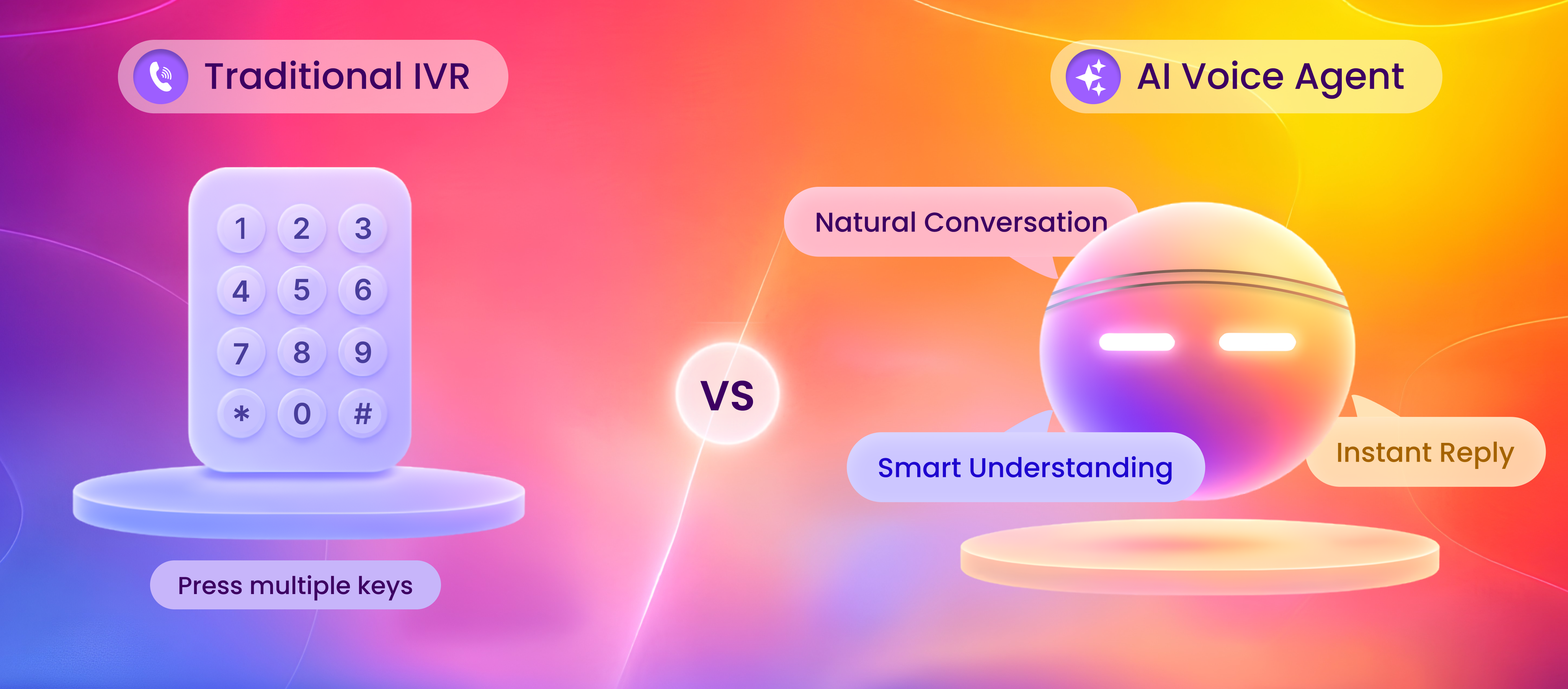
Traditional multilingual IVR systems often begin with:
“For English, press 1. For Spanish, press 2. For French, press 3.”
This approach is functional, but not particularly intelligent.
The customer must choose a language before explaining the problem. If the correct language option is not available, the customer may have to switch to another language or wait for a human representative.
Multilingual AI voice agents take a different approach.
A customer can simply start speaking.
The AI can analyze the speech, identify the language, understand the request, and continue the conversation accordingly.
This removes unnecessary steps and makes the interaction feel more human.
The technology does not need to make the customer think about the system. The customer simply communicates.
The Technology Behind Multilingual Voice AI
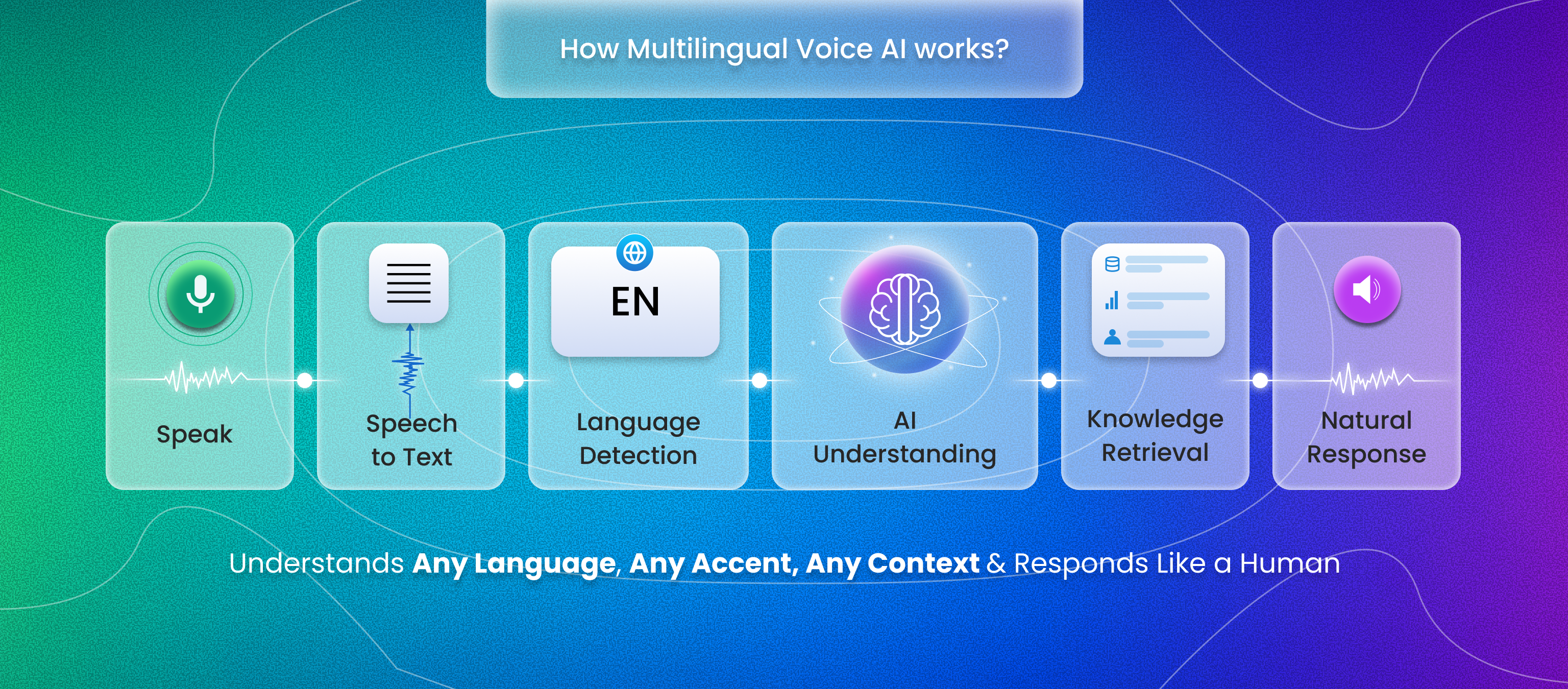
Several technologies work together to make multilingual AI voice agents possible.
Automatic Speech Recognition
Automatic Speech Recognition, or ASR, converts spoken language into text.
Modern ASR systems are designed to understand different accents, speaking styles, and languages. They can also help identify what the customer is saying in real time.
Natural Language Understanding
After speech is converted into text, AI needs to understand the meaning behind it.
For example:
“I need to change my flight.”
“Can you move my booking to tomorrow?”
These sentences use different words but have a similar intent.
Natural Language Understanding helps the AI recognize the actual purpose of the conversation.
Large Language Models
Large Language Models help AI understand context and generate more natural responses.
They can support complex conversations instead of relying only on fixed scripts.
Text-to-Speech
Text-to-Speech technology converts the AI's response into spoken language.
Modern voice technology can create more natural conversations with improved pronunciation, pacing, and speech patterns.
Together, these technologies create a complete conversational AI system.
Global Customer Support Without a 24/7 Language Barrier
One of the biggest benefits of multilingual AI voice agents is continuous availability.
A global business may have customers calling from:
- North America
- Europe
- Asia
- The Middle East
- Latin America
These customers may call at completely different times.
Maintaining multilingual support teams around the clock can be expensive and difficult.
AI voice agents can provide first-level assistance at any hour.
For example, a customer in Dubai may call outside the company's standard working hours, while another customer in Spain contacts the business several hours later.
Both customers can receive immediate assistance in their preferred language.
This helps businesses move from regional support hours to global availability.
Multilingual AI Voice Agents Are Not Limited to Customer Support
Although customer service is one of the most obvious use cases, multilingual voice AI can support many business functions.
Sales and Lead Qualification
A potential customer can interact with an AI voice agent in their preferred language.
The AI can ask qualifying questions, understand requirements, and pass high-value leads to a sales team.
This is especially valuable for businesses expanding into international markets.
Appointment Scheduling
Healthcare providers, clinics, salons, financial institutions, and service companies can use multilingual voice agents to schedule appointments and answer routine questions.
Customer Follow-Ups
AI voice agents can make outbound calls for:
- Appointment reminders
- Customer feedback
- Payment reminders
- Service updates
- Lead follow-ups
Logistics and Transportation
A multilingual AI voice agent can communicate with drivers, customers, warehouses, and delivery teams across different regions.
For global logistics operations, this can simplify communication and reduce language-related delays.
The Importance of Regional Language and Cultural Context
Supporting a language is not always enough.
A truly effective multilingual AI voice agent should also consider how people communicate in different regions.
The same sentence can sound natural in one culture and awkward in another.
For example, a formal tone may be preferred in one market, while a friendly and conversational style may work better in another.
Businesses must also consider:
- Regional accents
- Local expressions
- Formal and informal speech
- Cultural expectations
- Currency and date formats
- Local business terminology
This is where customization becomes important.
A global AI voice agent should not feel like a translated machine. It should feel relevant to the person using it.
Multilingual AI and Human Agents Can Work Together
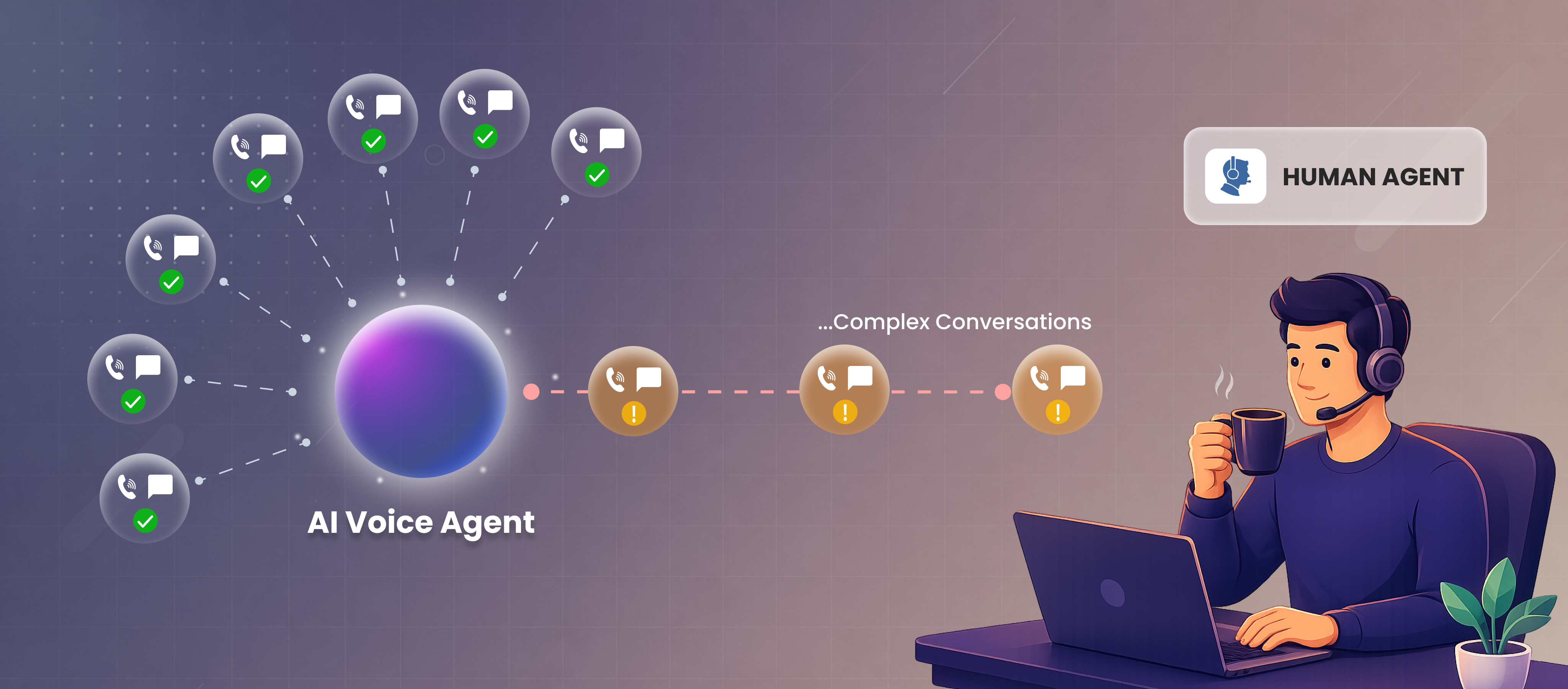
The goal of multilingual AI voice agents is not necessarily to eliminate human contact.
In many cases, the best model is a combination of AI and human expertise.
The AI can handle:
- Repetitive questions
- Basic requests
- Information collection
- Appointment scheduling
- Routine follow-ups
A human agent can handle:
- Complex complaints
- Sensitive conversations
- Negotiations
- High-value customers
- Cases requiring human judgment
When transferring a call, the AI can also provide the human agent with a summary of the conversation.
This means the customer does not have to repeat everything again.
That small improvement can make a significant difference to the customer experience.
Why Businesses Are Adopting Multilingual Voice AI
The business case is becoming increasingly clear.
Wider Market Reach
Businesses can communicate with more customers without building separate support teams for every language.
Faster Response Times
AI voice agents can respond immediately instead of placing customers in long queues.
Lower Operational Pressure
AI handles repetitive interactions, allowing human teams to focus on more complex work.
Consistent Customer Experience
Businesses can maintain consistent information and service standards across multiple regions.
24/7 Availability
Customers can receive support outside traditional business hours.
For companies entering new markets, multilingual AI voice agents can become a powerful growth enabler.
What Should Businesses Consider Before Deploying Multilingual AI?
Successful implementation requires more than simply adding multiple languages to an AI system.
Businesses should evaluate:
- Which languages their customers actually use
- Regional accents and dialects
- Data privacy requirements
- Integration with CRM and business systems
- Quality of speech recognition
- Accuracy of AI responses
- Human escalation processes
The AI should also be tested with real-world conversations instead of relying only on perfect scripted examples.
Customers may interrupt, change topics, use slang, speak quickly, or switch languages during a conversation.
A successful system must be designed for how people actually speak—not how technology expects them to speak.
The Future of Global Business Conversations
The next generation of AI voice agents will become increasingly intelligent.
They will not simply translate languages. They will understand context, customer history, cultural preferences, and business processes.
A customer might speak Arabic, switch to English, ask about a previous interaction, and request a specific action—all within the same conversation.
The AI voice agent will be expected to follow that conversation naturally.
This represents a significant shift in global customer engagement.
Businesses will no longer need to think of language as a major operational barrier. Instead, multilingual AI can become part of their digital infrastructure.
Conclusion: A More Connected Global Business
Language should not prevent a customer from receiving help, buying a product, or accessing a service.
Multilingual AI voice agents are helping businesses create more accessible, responsive, and scalable customer experiences.
The technology combines voice AI, machine learning, natural language processing, and business automation to make global conversations easier.
For companies looking to expand internationally, the question is no longer simply:
“How many languages can our support team handle?”
The better question is:
“How many customers can we serve when language is no longer a barrier?”
The businesses that answer that question early may have a significant advantage in the global market.
FAQ’s
1. What are multilingual AI voice agents?
Multilingual AI voice agents are intelligent systems that understand, process, and respond naturally in multiple languages during real-time customer conversations.
2. How do multilingual AI voice agents benefit global businesses?
They help global businesses provide 24/7 multilingual support, reduce operational costs, expand market reach, improve customer experiences, and handle higher conversation volumes.
3. Can multilingual AI voice agents understand different accents?
Modern multilingual AI voice agents can recognize many accents and speech patterns, although performance depends on language models, training data, audio quality, and system configuration.
4. Can multilingual AI voice agents switch languages during conversations?
Yes, advanced multilingual voice agents can identify language changes and continue conversations in supported languages, creating smoother, more natural experiences for international customers.
5. Will multilingual AI voice agents replace human customer support teams?
Multilingual AI voice agents primarily automate repetitive interactions while human teams manage complex, sensitive, and high-value conversations requiring empathy, judgment, and personal expertise.


