

As 5G technology becomes increasingly mainstream, conversations in the tech world have shifted toward the next frontier: 6G. While 5G has revolutionized industries with ultra-fast speeds, low latency, and massive device connectivity, 6G promises to redefine our relationship with technology, unlocking possibilities that today might seem like science fiction.
What is 6G?

6G, or the sixth generation of wireless communication technology, is the next step in evolving mobile networks. Although still in its infancy, research and development efforts are intensifying globally, with a target deployment window around 2030. Experts predict that 6G will provide speeds up to 100 times faster than 5G, with latency approaching near-zero levels.
Key Features of 6G

Terahertz (THz) Spectrum
Unlike 5G, which operates primarily in the millimeter wave spectrum, 6G is expected to utilize terahertz frequencies. These higher frequencies enable unprecedented data transmission rates but present significant challenges, such as signal attenuation and shorter range.
Sub-Millisecond Latency
Building on 5G’s ultra-low latency, 6G aims to achieve sub-millisecond response times, which are critical for real-time applications like autonomous vehicles, remote surgery, and immersive gaming.
AI-Driven Networks
Artificial intelligence will play a central role in 6G, enabling self-optimizing networks that adapt to changing conditions, user behavior, and demand patterns in real-time.
Massive Device Connectivity
While 5G supports a million devices per square kilometer, 6G is expected to scale this to tens of millions, driving advancements in smart cities, IoT, and industrial automation.
Integrated Sensing and Communication
A unique aspect of 6G is its ability to integrate communication with sensing capabilities. This means 6G networks could map physical environments, detect objects, and enable precise location-based services.
Potential Applications of 6G

Holographic Communication
Imagine attending a virtual meeting where participants appear as life-like holograms, interacting in real-time as though physically present. 6G’s bandwidth and low latency will make this possible.
Digital Twins
6G will enable real-time synchronization between physical and digital twins, driving innovation in manufacturing, healthcare, and urban planning.
Space-Air-Ground-Sea Integration
6G aims to provide seamless connectivity across all environments, including outer space. This could pave the way for new satellite-based communication systems and ubiquitous global internet coverage.
AI-Powered Smart Cities
With its massive connectivity and integrated sensing, 6G will facilitate smarter urban environments, improving traffic management, energy consumption, and public safety.
Advanced Healthcare
6G networks will support breakthroughs in telemedicine, including remote surgeries using haptic feedback and real-time diagnostics through connected medical devices.
Challenges in 6G Development

Spectrum Limitations
The terahertz spectrum, while promising, is highly susceptible to atmospheric absorption and requires novel technologies to overcome signal degradation.
Infrastructure Requirements
The rollout of 6G will demand extensive infrastructure upgrades, including new base stations and edge computing systems.
Energy Efficiency
Operating at higher frequencies requires more energy. Researchers are working on sustainable solutions to mitigate environmental impact.
Standardization and Regulation
Achieving global consensus on 6G standards and spectrum allocation will be a complex process involving governments, private companies, and international bodies.
Global Race for 6G
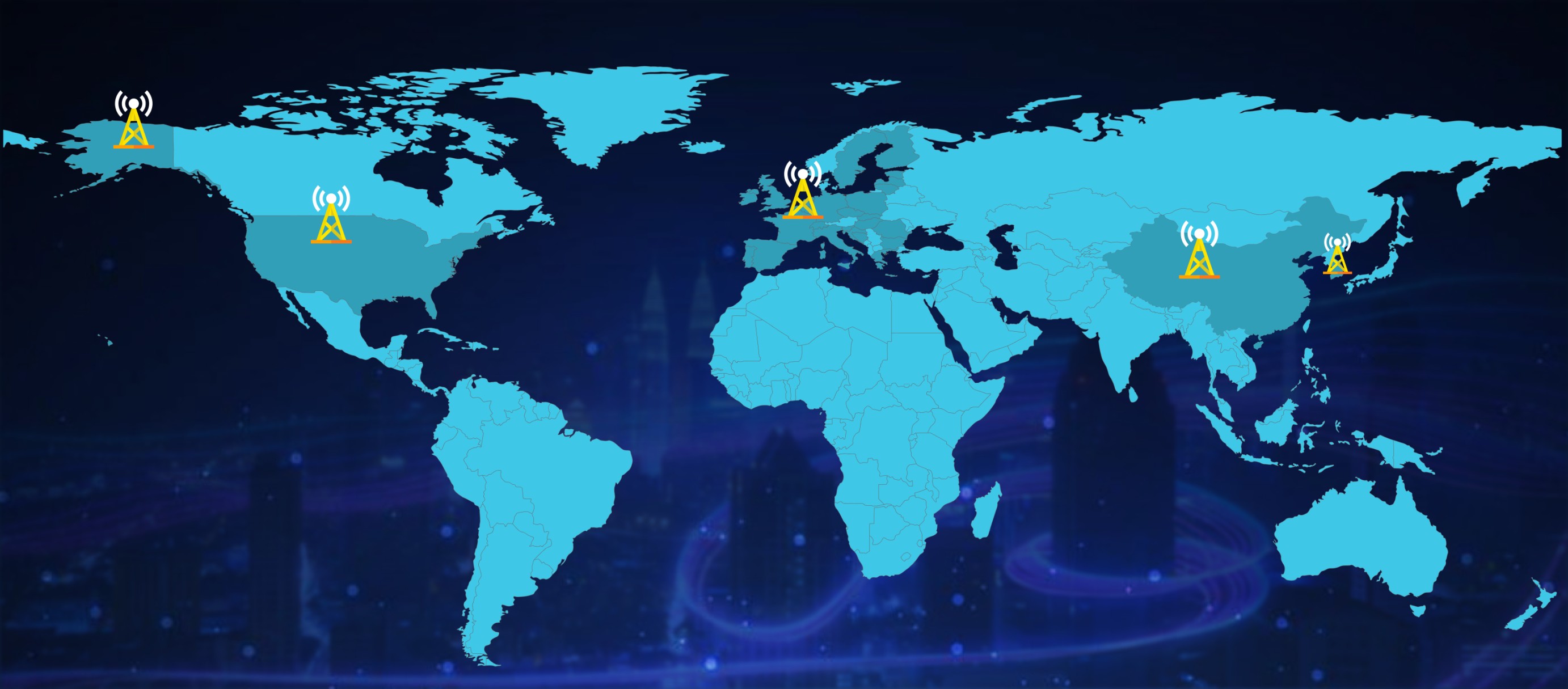
The global race for 6G is intensifying as countries and tech giants vie for leadership in this transformative technology. China and South Korea target 2028 for commercialization. The United States is investing in research to maintain its competitive edge, and the European Union is advancing initiatives under its Horizon Europe program. This race is not merely technological but also strategic, as nations seek to secure economic and geopolitical advantages. Collaboration and competition are driving innovations, shaping a future where 6G becomes a cornerstone of global infrastructure and digital sovereignty.
Countries and tech giants are already investing heavily in 6G research. For instance:
- China launched its first 6G experimental satellite in 2020.
- South Korea aims to commercialize 6G by 2028.
- The United States has initiated programs to maintain leadership in wireless technology.
- The European Union is funding extensive 6G research under its Horizon Europe initiative.
Preparing for the 6G Era

While 6G may seem distant, its development underscores the rapid pace of technological innovation. Businesses, governments, and individuals must start preparing now to adapt to the opportunities and challenges it will bring.
- Businesses should explore use cases that align with 6G’s capabilities.
- The government needs to invest in research, infrastructure, and policy development.
- Individuals can look forward to unprecedented technological experiences and opportunities in education, healthcare, and beyond.
Conclusion
6G is more than just an upgrade; it’s a profound reimagining of what connectivity entails, extending far beyond faster speeds and reduced latency. By 2030, it is poised to transform industries such as healthcare, education, and entertainment by enabling real-time holographic communication, hyper-personalized services, and enhanced global collaboration.
6G has the potential to redefine societal norms, from how we interact with technology to how we design our cities and workplaces. Despite technical and regulatory hurdles, 6G’s boundless possibilities promise a seamless integration of the digital and physical realms, creating a more interconnected, efficient, and innovative world for future generations.
FAQ’s
1. What is 6G?
6G is the next generation of wireless technology, promising ultra-high speeds, near-zero latency, and integrated sensing capabilities.
2. How is 6G different from 5G?
6G offers faster speeds, sub-millisecond latency, massive device connectivity, and AI-driven networks, significantly enhancing 5G's capabilities.
3. When will 6G be available?
Experts predict that 6G will be commercially deployed by 2030, with early trials starting in the late 2020s.
4. What industries will benefit most from 6G?
6G technology will transform healthcare, manufacturing, smart cities, entertainment, and education.
5. What challenges does 6G face?
Key challenges include spectrum limitations, infrastructure demands, energy efficiency, and achieving global standardization.


